Maple Ridge, BC · Showroom & Warehouse Mon–Fri 9:00 AM – 4:30 PM

Maple Ridge, BC · Showroom & Warehouse Mon–Fri 9:00 AM – 4:30 PM
No products in the cart.
DIY Artificial Turf Installation ·
Installing artificial turf is a realistic DIY project for most British Columbia homeowners. With the right materials, a proper base, and a clear plan, you can have a clean, low-maintenance lawn backed by a 15-year product warranty. Premium Grass Blades will help you get there.
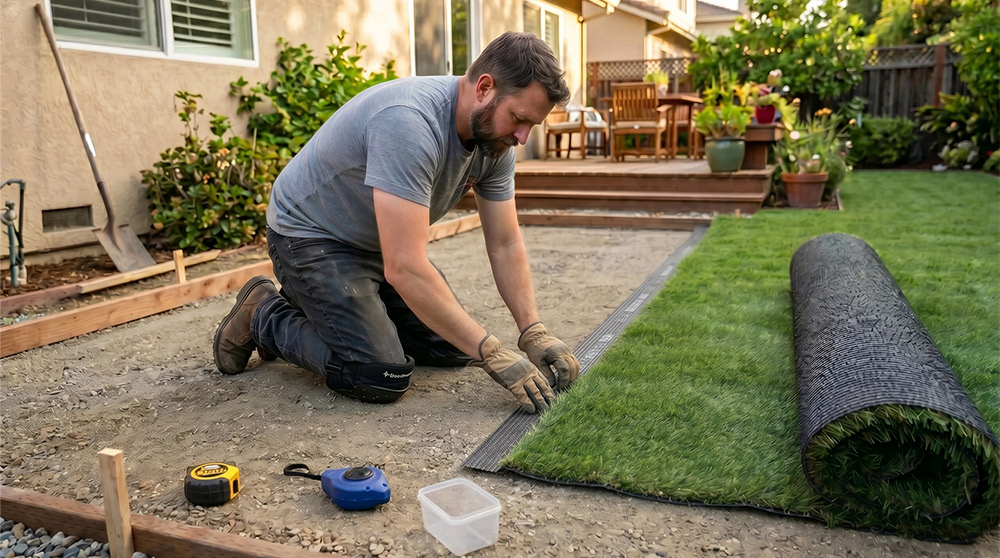
Before You Start
Most residential artificial turf installs in
That said, some projects are more complex than others. Being honest about your situation before you start will save you time, money, and frustration.
Our team is here to help you plan. Before you buy anything, contact us with your yard dimensions, photos if possible, and any questions about drainage, slope, or base prep. A 10-minute conversation can save you a full weekend of rework.
READY TO START YOUR PROJECT?
Tell Us About Your Install: We’ll Help You Plan It.Whether you’re ready to order or still figuring out your plan, our team is here to help. Share your project details and we’ll come back with product recommendations, quantity estimates, and answers to any questions you have, with no obligation.
Plan My DIY Install
We respond within one business day.
WHAT YOU’LL NEED
Having the right materials before you start is one of the most important parts of a successful install.
Premium Grass Blades stocks everything you need, available for pickup at our Maple Ridge warehouse or delivery across British Columbia.
📦 Materials You’ll Need to Buy
🔧 Tools You’ll Need to Have or Rent
Not sure what infill to use? The right infill depends on your turf product and how you’re using the space. Ask our team before you order and we’ll match you with the right product for your project.
STEP-BY-STEP INSTALLATION
How to Install Artificial Turf: AFollow these steps in order. The base preparation stages (Steps 1–3) are the most important, because they determine how your turf performs and how long it lasts. Don’t rush them.
1
Draw Out Your Plan
Before any digging or measuring, sketch your turf layout to scale on graph paper. A simple plan helps you order the right amount of turf, place seams where they won’t show, and spot problems before they cost you time or material.
Include all existing features: Fences, patios, trees, garden beds, and slopes
Note the direction you'll want the turf to face for the best appearance
Mark where any seams will fall, keeping them out of high-traffic and high-visibility areas
Photograph the area before you start: Useful for planning and problem-solving later
PGB Tip: Send us your plan and measurements before you order. We can confirm your turf quantity and help you lay out the job to minimise seams.
2
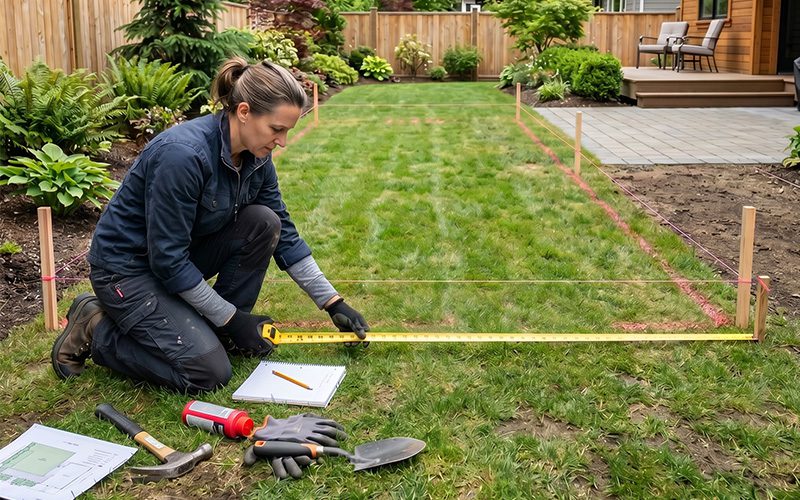
Measure Your Area
Accurate measurements are what stop you from running short or over-ordering. Measure the full area you plan to turf and calculate the total square footage.
Measure length and width, and multiply for total square footage
For irregular shapes, break the area into rectangles and add them together
Add 5% extra for cutting, trimming, and adjustments
Note any tight corners or obstacles that will need careful cutting later
PGB Tip: Not sure how to measure an irregular yard? Send us a sketch with rough dimensions and we’ll confirm the quantity for you.
⚠️ Call
3
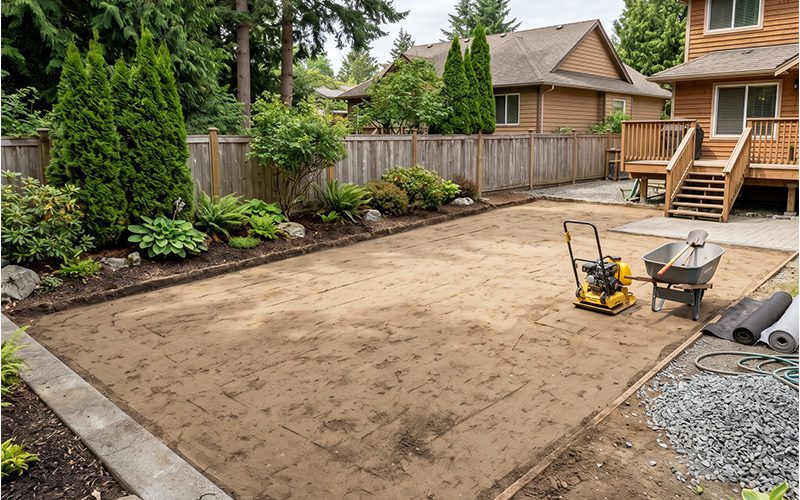
Excavate the Site
Remove the existing lawn and create a clean, level base to build on. Any organic material left behind will decompose, create soft spots, and let weeds push through over time. Depths below are general guidance: properties with poor drainage, heavy clay, or a high water table may need a deeper dig-out.
Remove grass, soil, and debris to a depth of 4–10 inches, depending on your drainage layer
Clear all rocks, roots, and obstructions so the base sits level
Use a turf cutter, shovel, or pickaxe for removal, and a sod cutter or mini-excavator for larger areas
Check the soil condition once exposed: Soft, unstable areas may need additional work
⚠️ Call BC 1 Call (1-800-474-6886) before you dig to identify underground utilities. This is free and required by law in British Columbia.
PGB Tip: In British Columbia’s wet climate, proper excavation depth is more important than in drier regions. Skimping here is the most common cause of poor long-term performance..
4
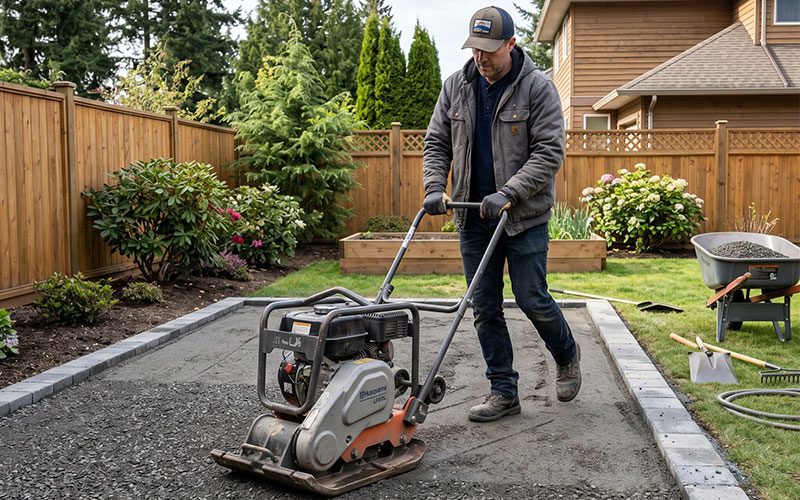
Add, Level and Compact the Base
This is the foundation of your entire install, and it’s where DIY installs most often succeed or fail. A properly built and compacted base provides drainage, stability, and prevents the turf from shifting or developing soft spots.
Spread 3/4" minus crushed gravel (road base) evenly across the excavated area
Use a landscape rake to level the base material
Lightly moisten the aggregate and compact in 2–3 inch increments with a plate compactor, avoiding overwatering to prevent a sponge effect
Grade the surface so water drains away from structures: Aim for a 1–2% slope
Finish with a 1-inch layer of crusher fines (crusher dust) to create a flat, smooth surface, then compact again
Finished base should feel firm underfoot with no give
PGB Tip: Renting a plate compactor is non-negotiable for a lasting result. Hand-tamping a large area is not sufficient.
5
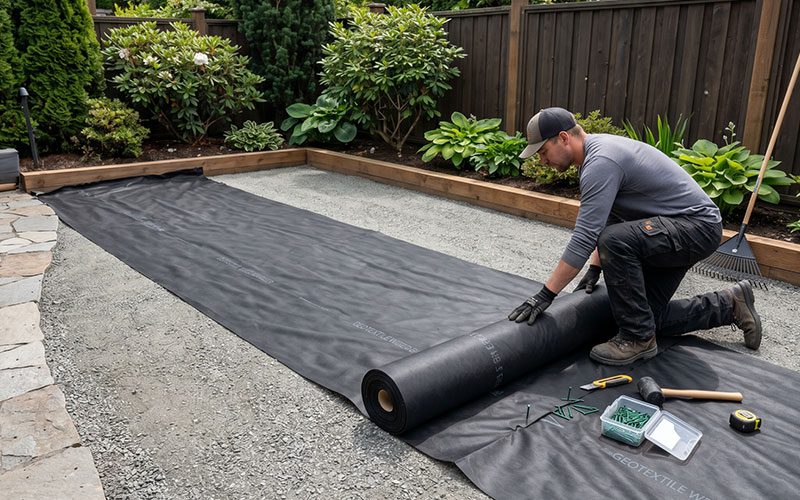
Lay the Weed Barrier
A quality weed barrier installed between the crusher fines and the turf backing prevents growth from pushing through, adds stability, and dampens the sound of the base beneath the turf.
Lay the barrier across the entire area, overlapping seams by 3–6 inches
Pin it in place and smooth out any wrinkles to prevent uneven turf
Trim neatly around obstacles and the perimeter
Use a commercial-grade, non-woven barrier: Thin consumer products break down faster
⚠️ Skip the weed barrier in pet areas. Barriers can trap urine and cause odours. For pet zones, rely on proper base compaction and drainage instead.
PGB Tip: We stock heavy-duty 15 ft wide weed barrier, wide enough to cover most yard areas in one or two strips.
6
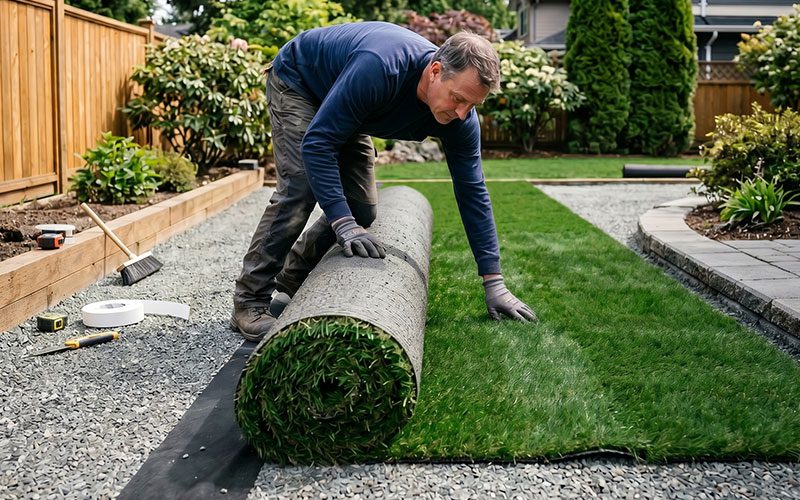
Position and Lay the Turf
Roll out your turf across the prepared base, paying close attention to pile direction and seam placement. Getting the grain consistent is what makes the finished lawn look natural.
Identify the pile direction (the way the blades lean) before you commit
Lay the turf pile facing toward the main viewing angle: In a backyard, point it toward the house; in a front yard, point it toward the street
Position seams away from high-traffic areas and sight lines, and use side seams rather than head seams where possible
Let the turf relax for 1–2 hours in warmer weather so it flattens and is easier to work with
Leave extra material at the edges: Trim to final size after positioning
PGB Tip: Our 15 ft wide rolls reduce the number of seams needed for most standard backyards. Ask us about roll widths when you order.
7
Cut and Trim to Fit
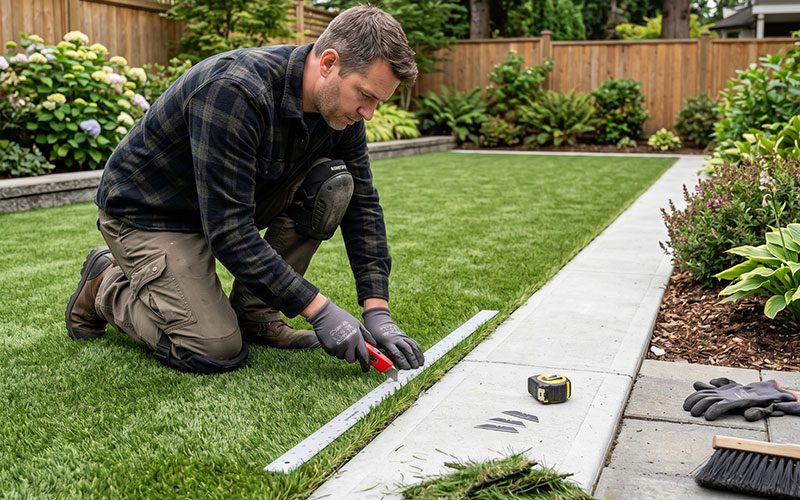
With the turf positioned, cut it to its final shape. Careful cutting is what separates a professional-looking result from an amateur one.
Cut from the backing side with a sharp utility knife, never from the top, and change blades regularly>
Along walls and fences, make small incremental cuts of 3–4 inches, leaving no more than a 1/8 inch gap from the edge
For corners, trees, or posts, make relief cuts from the backing outward to ease the material into place
Slightly recess the turf from walkways for a smooth transition between surfaces
Always remove the manufacturing ribbon from the edge of the turf
PGB Tip: Before cutting your final edges, double-check positioning one more time. Once cut, there’s no going back.
8
Join Seams (If Applicable)
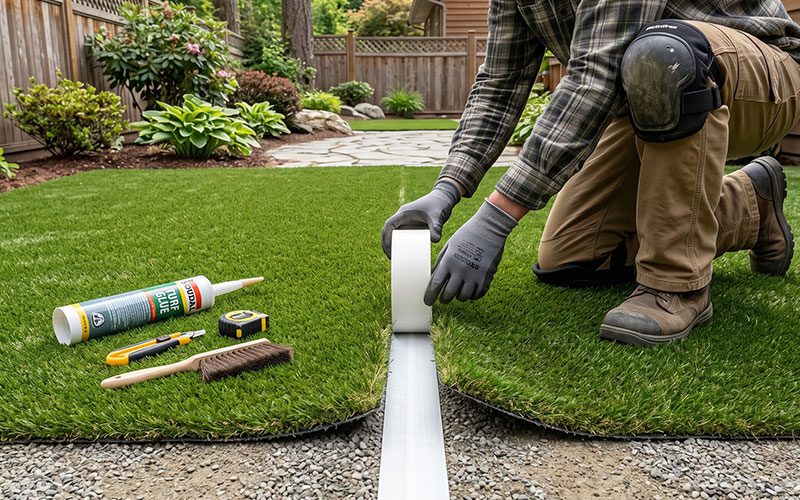
If your project needs more than one piece of turf, seaming is the most skill-sensitive part of a DIY install. Done well, seams are virtually invisible.
Trim both edges along the same row of stitching so the seam sits cleanly
Lay self-adhesive seaming tape face-up under the seam, centred between the two edges
Press both edges firmly onto the tape, working from the centre outward
Check that pile direction matches on both sides before pressing down
Maintain even spacing so blades stand naturally and avoid a "mohawk" effect along the seam
⚠️ Seaming is the hardest part of a DIY install. If your project has multiple seams in visible areas, contact us. We can advise on technique or connect you with an experienced installer in your area.
9
Secure the Perimeter
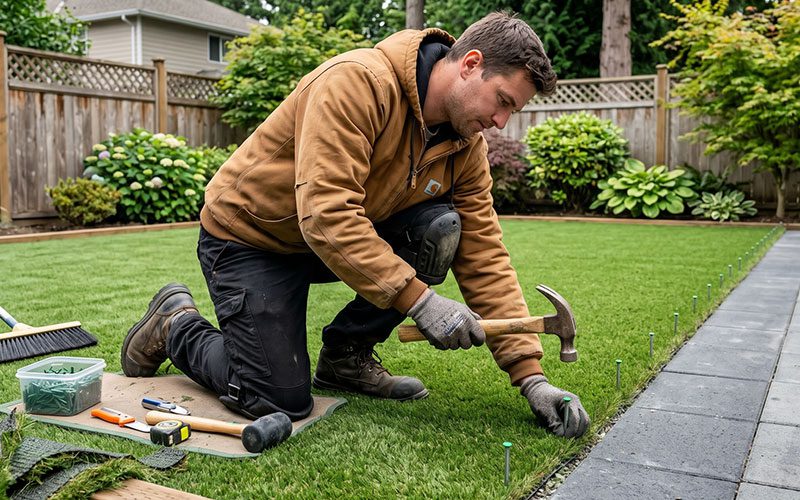
Once the turf is cut and seamed, secure it to the base so it can’t lift, shift, or peel back over time.
Insert galvanized spikes every 6 inches along the perimeter, about 2 inches in from the edge
Use roughly one spike per square foot across the area, in rows up and down the turf, for added reinforcement
Pull the blades away before hammering so they don't get trapped under the head
Use gentle, even force so nail heads sit flush without creating depressions
Do not hammer spikes into cold or frozen ground, which can cause damage
PGB Tip: We stock 6-inch turf nails individually and by the box. Match nail density to expected foot traffic.
10
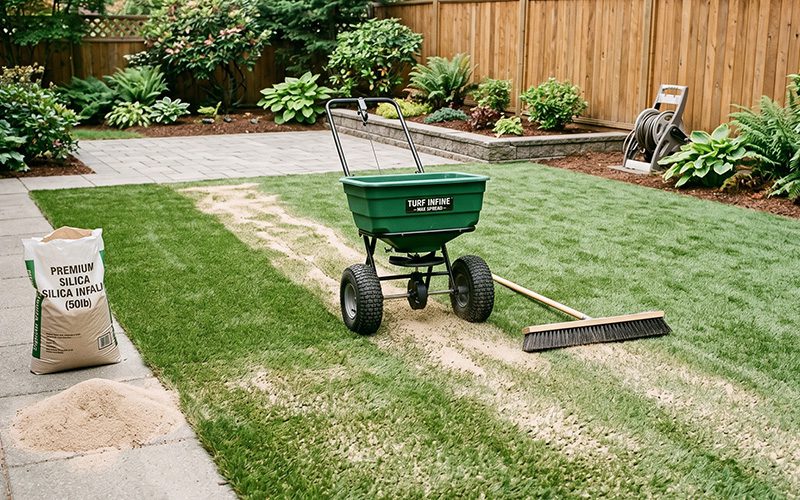
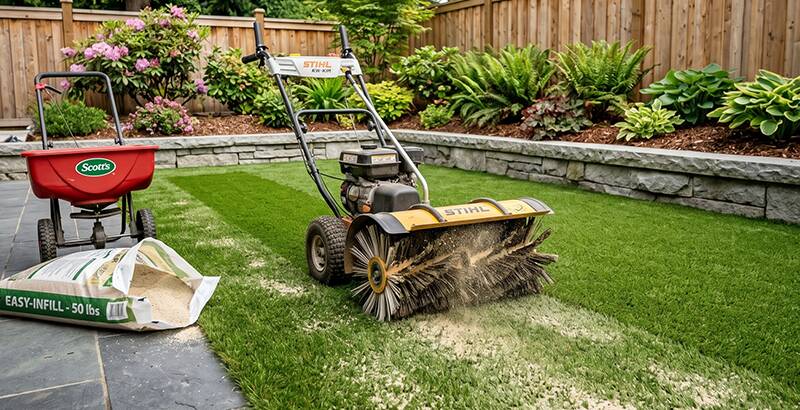
The final stage stands the fibres up, adds infill to stabilise the turf, and grooms the surface to a natural finish. Make sure the turf and infill are dry before you start, as moisture causes clumping and uneven distribution.
Brush the blades upright first with a power broom or stiff turf rake to lift and separate the fibres
Apply infill in small sections using a spreader for even coverage, and wear a mask to avoid inhaling fine particless
Work the infill down into the pile, repeating until it's no longer visible on the surface
Apply the quantity recommended for your specific turf product
For pet areas, use Zeo Odour infill for cooling and natural odour control
Finish with a final pass against the pile direction, and water lightly to settle the infill
PGB Tip: For larger areas, a rented gas-powered power broom makes the brushing passes faster. For most backyards, our turf rake does the job. Ask our team which is right for your project.
1–2
Weekends for most
15yr
Product warranty on all PGB turf
500+
Free
Planning support from our team
WHAT YOU’LL NEED FROM PGB
Everything for Your DIY Install — In Stock in Maple Ridge
Premium Grass Blades stocks all the materials you need for a complete DIY artificial turf installation. Pick up from our Maple Ridge warehouse or arrange delivery across
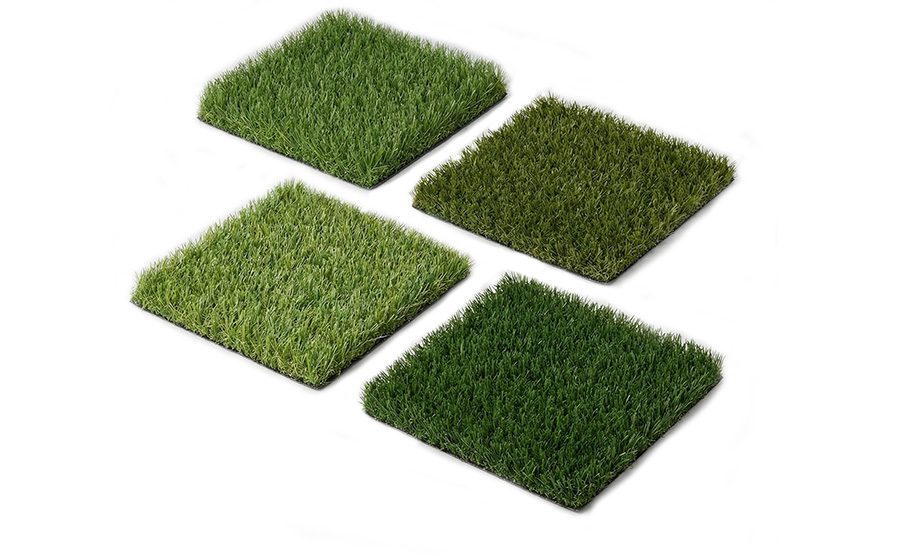
Available in 7.5 ft and 15 ft wide rolls. Multiple pile heights and densities for every use case.
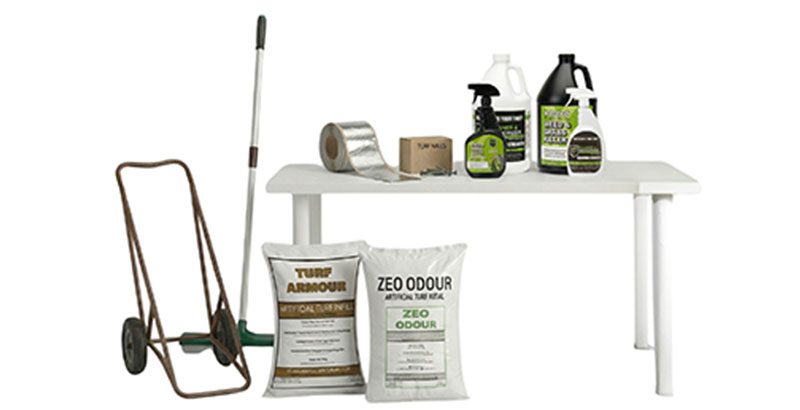
Seaming tape, 6-inch turf nails, staples, heavy-duty 15 ft wide weed barrier, and construction adhesive. Everything for a secure, long-lasting install.
DIY QUESTIONS
Most residential backyard installs — say 400–800 sq ft — take a motivated homeowner one to two weekends. The base preparation is the most time-consuming phase. Smaller, simpler areas can be done in a single day.
In most
It's not recommended, especially in
Measure your area in square feet (length × width) and add 10–15% for trimming waste. For irregular shapes, break into rectangles and add together. Contact us with your dimensions and we'll confirm the right quantity.
It depends on your use case. For a general lawn, our Cedar and Forest Green Elite lines are popular. For pet areas, Evergreen with Zeo Odour infill is the top recommendation. For shaded yards, Westcoast Hemlock's shorter pile is easier to maintain. Visit our showroom or contact us and we'll help you choose.
A gentle slope (1–2%) is actually ideal — it directs water away from structures naturally. Steeper slopes require more careful base preparation. If you have a significant slope, contact us before you start.
Yes. Turf can be installed directly over concrete, pavers, or a wood deck — no gravel base is required on a hard surface. Use construction adhesive or perimeter nailing to secure the edges.
Very little. Occasional brushing to keep fibres upright, removing debris, and rinsing pet areas is typically all that's needed. For a more thorough seasonal clean, we offer turf cleaning and renewal services.
Absolutely. Call us on (604) 757-2899 or visit the showroom during business hours and our team will help you work through whatever you're facing — seaming, drainage, material issues. We want your install to go well.
YOU’VE GOT THIS – AND WE’VE GOT YOU
Your DIY Install Starts With the Right Materials and a Solid Plan.
Premium Grass Blades has been helping
Visit our Maple Ridge showroom to see every turf product in person, request a formal written quote online, or call our team to discuss your strata project in detail.
Please provide your details so we can better assist you.